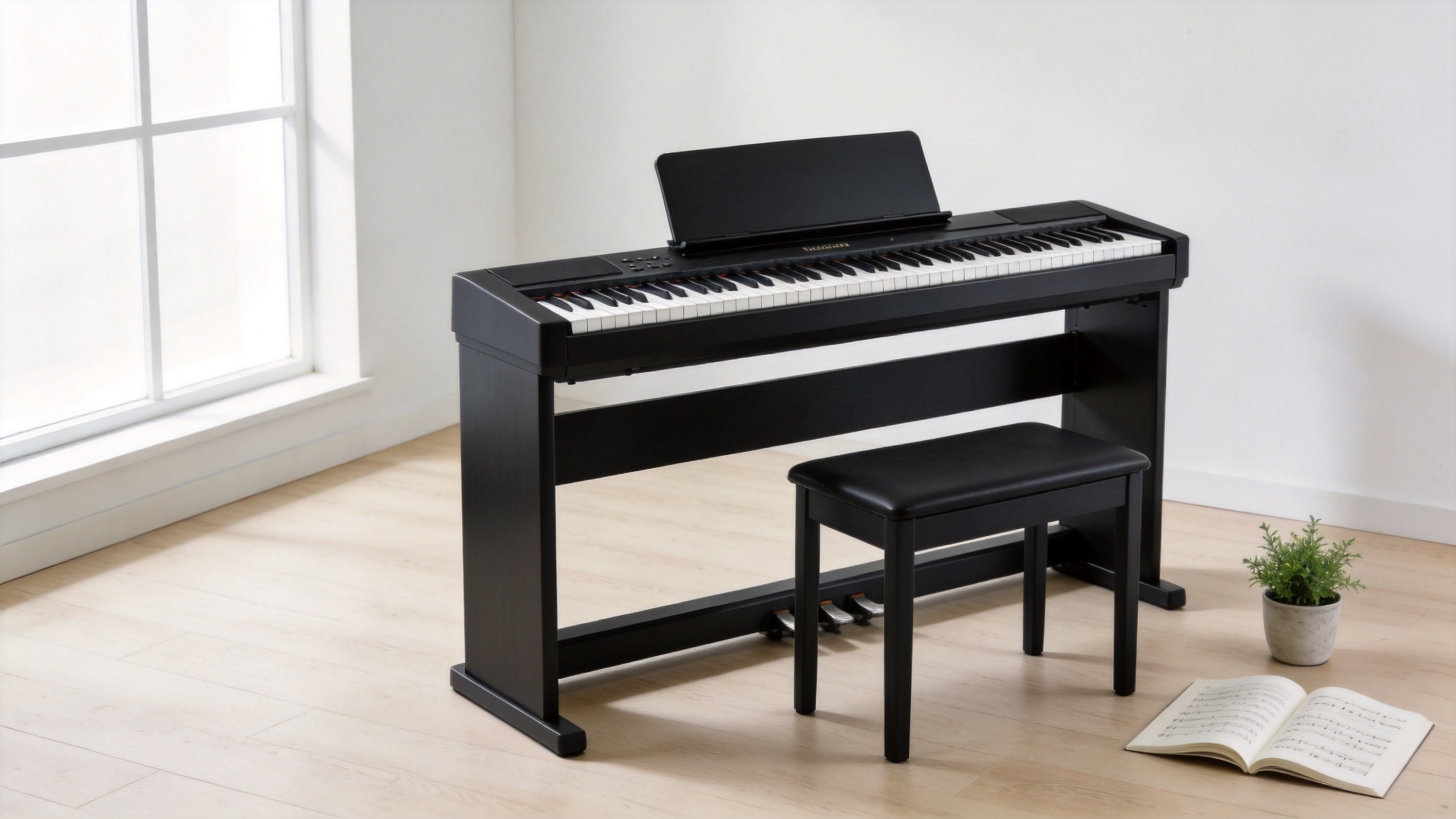
See the MUSTAR Keyboard Piano, 61 Key Electric Piano Keyboard with Light-... on Amazon
See More Reviews on Amazon →The MUSTAR Keyboard Piano 61 Key Electric Piano Keyboard with Light-Up Keys is a beginner-priced portable keyboard built around playing aids, not acoustic realism. Buy it if you need light-up keys to learn notes, a full 61-key span, and built-in sounds in one box that can sit on a desk. Skip it if you expect piano-like key weight or a rugged road-ready shell — the specs and owner feedback point to a different tool.

What the Mustar 61 Key Keyboard Actually Is
See the MUSTAR Keyboard Piano, 61 Key Electric Piano Keyboard with Light-... on Amazon
See More Reviews on Amazon →MUSTAR positions this as an entry electric piano keyboard for learners, and the headline feature is the light-up key system. At 61 keys, the layout covers the standard range most beginner method books use, and it runs on built-in speaker sound rather than needing an amp or external monitor to get going.
Based on specs and user feedback, this is a keyboard for someone who wants to see which note to press next, not for someone chasing graded hammer action. The 4.5-star rating across 1,101 reviews suggests buyers generally get what the listing promises, though the typical beginner-keyboard tradeoffs still apply — see the drawbacks below.
Two things to be clear on before buying. First, no price appears here because pricing on this listing varies by seller and changes — check the current listing. Second, the light-up keys teach note location; they do not replace a method book or a teacher for rhythm and technique.
Light-Up Keys: Who They Help and Who They Don't
Light-up keys are the reason most people end up on this listing. A key that lights tells you where a note lives on the keyboard, which is useful in the first weeks when the map from staff notation to physical key is still forming.
- Good fit: complete beginners who want a visual cue while following simple songs.
- Good fit: buyers who already know they will practice on a desk or table, where a 61-key slab fits.
- Poor fit: learners past the note-finding stage — the lights stop adding value quickly.
- Poor fit: anyone who wants weighted keys to build piano touch from day one.
The honest drawback of any light-up key system: it can encourage watching the keyboard instead of reading the staff. Use the lights as training wheels and deliberately play some exercises with them off.
How the Mustar Compares on the Details That Matter
Here is the concrete comparison data available for this model. Specs beyond what is listed are not asserted here; anything not confirmed by the product data or broadly reported by owners is left out rather than guessed.
| Feature | MUSTAR Keyboard Piano (B0DWDX495K) |
|---|---|
| Keys | 61 |
| Light-up keys | Yes |
| Type | Portable electric piano keyboard |
| Rating | 4.5 out of 5 |
| Review count | 1,101 |
| Where to buy | See More Reviews on Amazon |
The rating is the strongest signal in that table. A 4.5 average over more than a thousand ratings is a lot of buyer experience to average out, and it means the light-up function and beginner sound package are landing as advertised for most owners.
Keys and Touch
61 keys is the right count for beginner repertoire and gives you more range than a 49-key or 37-key controller. The keys are not marketed as weighted or hammer action, so treat this as a synth-action keyboard. If graded touch is your goal, this is the wrong price class and the wrong model — plan for a different category of instrument.
Practice Space and Portability
Portable keyboards of this type are designed to sit on a desk or a stand rather than live in one room permanently. Because it runs on built-in speakers, there is no accessory purchase required to start playing. If you plan to play standing or want a fixed-height setup, budget for a stand separately — it is not a substitute for a real furniture piano bench or heavy stand.
Learning Aids Beyond the Lights
The keyboard's value proposition is the visual cue plus a self-contained sound source. That is genuinely handy for a first instrument: fewer moving parts, fewer cables, and a clear next-note hint. Do not expect the lights to teach rhythm, dynamics, or hand independence — those come from practice material, not the hardware.
Where the Mustar Falls Short
No product is right for everyone, and the drawbacks here are specific enough that they should decide some buyers against it.
- No piano-grade action. Buyers who want to build acoustic-piano technique will outgrow synth-action keys and later need a second instrument. That is a do-over, not a feature.
- Light-up keys have a ceiling. Once a learner reads the staff confidently, the lights are decoration. Owners report the feature is most useful in the first weeks, not as a long-term learning system.
- Beginner-tier build expectations. At this end of the market, the shell and key mechanism are built for home practice, not for gigging or hauling to lessons several times a week.
- Does not replace a teacher or a method book. The visual cue answers "where is the note," not "how should I play it."
None of those are defects — they are scope limits. The question is whether they match your first year of playing.
What Realistic Owners Mean When They Rate It 4.5
Broadly reported experience with beginner keyboards in this class matches the listing's stated focus: buyers who want a self-contained, lit-up keyboard for first lessons and simple songs tend to be satisfied, and the 4.5 average over 1,101 ratings is consistent with that. Buyers who expect weighted touch or stage durability are the ones who end up disappointed. Since the lights and 61-key range are the core promises, check owner feedback on those two points first via the listing.
One practical note: at this level, sound quality and touch vary between units in the category, and the listing rating averages that out. If a single weak area matters to you — speaker volume, key noise, or the light behavior — scan the recent ratings text before ordering rather than assuming the average tells the whole story.
Buy the Mustar If, Skip It If: The Decision Rule
Buy it if: you are a true beginner who wants light-up keys as a note-finding aid, you want 61 keys, and you need a self-contained keyboard that works on a desk or stand without extra gear.
Skip it if: you want weighted, piano-feel keys for serious classical study; you need an instrument that travels to weekly lessons in a case; or you already read music and the lights add nothing. Also skip it if you expect the keyboard to come with a stand, bench, or sustain pedal — those are separate purchases, and the pedal is one no beginner should skip for long.
For the light-up-key use case specifically, this is the model most buyers land on and the one with the review volume to back it. See More Reviews on Amazon to confirm current availability and seller details, since pricing and stock change.
Final Verdict
The MUSTAR Keyboard Piano 61 Key is a sensible first instrument for a visual learner who wants note guidance and a built-in speaker. It is not a practice piano for someone training toward acoustic technique, and the light-up feature is a starting aid, not a curriculum. Match the tool to the first six months of learning and it earns its rating; buy it for serious keyboard study and the synth-action keys will push you toward an upgrade sooner than you would like.
See the MUSTAR Keyboard Piano, 61 Key Electric Piano Keyboard with Light-... on Amazon
See More Reviews on Amazon →